Three Lesser Known Toll Booth Businesses
By Handzalah / Black Swan Research 30 September 2026, 12:55pm MYT


What does the three companies above have in common? I am assuming that not many would know what these companies do. For one, two of the three companies have their main business operations outside the US and in the Middle East. Aside from NRP (National Resource Partners L.P.), which operate mainly in the US, SAL and Salik both operate in the Middle East. SAL’s main operation is within the Kingdom of Saudi. And Salik’s main operation is within Dubai, UAE. All the three companies operate like a toll booth. But how? Let’s Find out.
Toll Booth businesses
To be a toll booth business, it is not necessary to have a literal building that stops vehicles from entering until they pay toll. A toll booth business as described by multibaggershares.com must meet 3 conditions:
- Huge crowd that have no alternative
- The toll fee charged is small for the individual
- Does not require fresh capital for sustaining the operations
SALIK
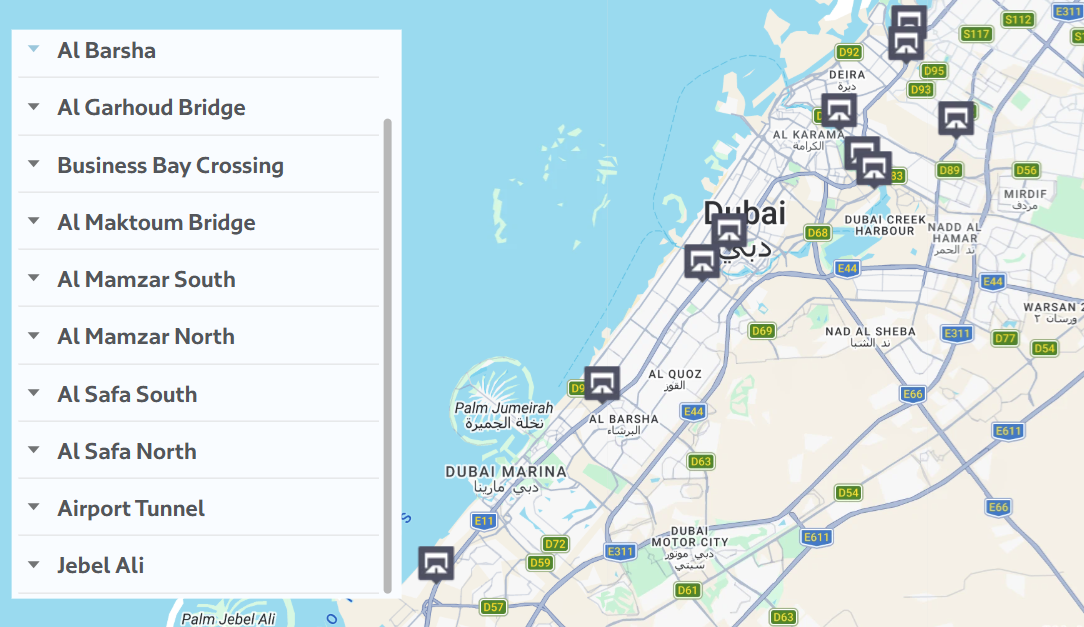
Salik is a literal toll booth operator with operations in Dubai. They operate under RTA’s (Road & Transport Authority) concession which lasts until 2071. The Dubai government’s DIF (Dubai Investment Fund) owns around 75% stake in the whole company. This government linkage creates a perceived stability in their business. Let’s see if Salik fulfills the 3 conditions:
- Huge crowd that have no alternative: Salik has a monopoly on the toll operations in Dubai therefore, they have a large crowd that would pay the toll fees. However, there are few alternate routes where you can bypass the tolls but it may take longer to use those routes therefore the cost of toll fee can be more desirable than the cost of longer trips.
- The toll fee charged is small for the individual: The toll charge per entry is small at around AED 4 (USD 1.09) depending on what time you choose to pass the toll. So even a theoretical increase in toll fees by 50%, the toll charged to the customers is just AED 6 (USD 1.63).
- Does not require fresh capital for sustaining the operations: Their CAPEX to revenue ratio is 0.04%. This reflects their business nature of low to no capital required to run the business. Another reflection of the low capital maintenance required is shown through their very low employee count of just 59 employees. Keep in mind this business is worth AED 42 billion (USD 11.44 billion).
NRP
NRP or National Resource Partners L.P. is a Delaware limited partnership. NRP owns, manages and leases a diversified portfolio of mineral properties in the US. NRP essentially holds the rights for minerals within certain acres of land. Their main natural resource under their mineral rights ownership is coal (both thermal and met coal). They also have a smaller business in trona ore mining, but to keep it simple let’s focus on the primary business, the coal rights business. Mineral right companies have characteristics of toll booth businesses despite not literally operating a toll booth. Let’s see if NRP fulfills the 3 conditions:
- Huge crowd that have no alternative: NRP owns the mineral rights to 13 million acres of land in the US. There is alternatives land for the search of coal however, within the 13 million acres, there is no alternative as NRP holds the full rights therefore gets a royalty from coal miners extracting coal in their mineral rights land. There is no huge crowd because coal miners are dominated by few large miners.
- The toll fee charged is small for the individual: According to the attached picture of a map below, NRP’s royalty of $4.58 on coal price per ton of $107.50 equates to charge to coal miners around 4.26% of their revenues. This is a small fee for the miners.
- Does not require fresh capital for sustaining the operations: NRP has zero CAPEX therefore, sustaining operations do not require a drop of fresh money.


SAL
SAL may stretch what it means to be a toll booth business. However, there are some qualities that make it close to that of a toll booth business. Today I want to only focus on SAL’s primary business which is air cargo ground handling (makes up ~85% of total revenues) provider within Saudi. Essentially SAL manages the freight from the terminal to the aircraft. They are a near monopoly with +80% market share measured by air cargo tons handled annually. Let’s see if SAL fulfills the 3 conditions:
- Huge crowd that have no alternative: As of 2026, SAL has seen some competition entering the market therefore, SAL business has alternatives. But there is not much alternatives. The monopoly position SAL holds, makes it so that air cargo leaving or entering the country must go through SAL. And SAL do not operate in a market where there is a large crowd.
- The toll fee charged is small for the individual: Fees charged for SAL’s ground handling services are decent portion of an airliner’s revenue. Around 15% of the airline’s revenues goes to ground handling expense. This means that unlike the other two toll businesses, SAL’s toll fee is slightly steeper.
- Does not require fresh capital for sustaining the operations: At 8.2% of revenue spent on CAPEX, SAL does not benefit from such a low capital requirement as the other two businesses. 8.2% of revenue is still quite low but SAL’s business would still require fresh capital to sustain operations.

Their financials reflects their resilient businesses


I will walk you through the chart above one by one. First, look at the top left chart. All of the 3 businesses have very high free cashflow margins of >45%. Salik and NRP, which are closer to the term toll booth business, have margins above 60%. This in a way shows their market dominance because it is rare to see margins this high without competition eroding and diluting the margins down. The margins can (but not always) reflect the pricing power of the business. So the higher the margins, the higher their ability to increase the prices for their services.
Let’s move on to the top right chart. All 3 businesses have return on invested capital (ROIC) of around 20% and up. This shows that their businesses are very capital efficient. Their ROIC is above their cost of capital which means that the businesses are creating surplus for the investors. SAL’s ROIC stands out as the best out of the 3 with a whopping 41% ROIC. There are only few businesses that have ROIC above 30%. This capital efficiency further emphasizes the market position SAL has amongst its competitors.
Now let’s move to the businesses’ debt usage. This can be seen by using debt to equity (D/E) ratio (chart on bottom left). The results in this ratio is a bit mixed. NRP has zero debt therefore their D/E is 0x. However, Salik has 3.3x D/E. Their heavy leverage is not because of their need for cash to fund existing operations but rather for the expansion of their toll services. There are some upfront concessions that Salik need to pay in order to expand their toll gate business. And SAL has a 1x D/E showing a modest usage of leverage. This too is because of their expansion in building warehouses, distribution centers, and airport terminal expansions. However, it is safe to assume that if we strip away their expansion projects, SAL would not need to be as highly levered. NRP is the star here with no debt. This is the effort of management to reduce their leverage over the years. Generally, these toll booth businesses, aside from their expansion projects do not require to be highly levered.
Lastly, take a look at the bottom right chart. Salik and NRP essentially have zero CAPEX which shows the true nature of a toll booth business. Toll booth businesses require close to zero funding for the continuation of their operations. With an exception to SAL, which operates a business that is not fully toll booth-like, Salik and NRP both are able to gain revenue with minimal need to reinvest in form of CAPEX.
These 3 companies reflect the resilient business attached to toll businesses. They are able to increase their earnings through the increase of price which can be increased above or near CPI or inflation growth rates. This protects the investors with loss of purchasing power over time as the businesses are able to increase their purchasing power despite being in an inflationary economy. They may be great investments, however, because of their perceived stability and predictability in earnings, their market valuation for their shares tend to be priced near fair value. Therefore, investors wishing for outsized returns (>7%) must buy the shares when the share price has been wrongfully punished. This may take time. But patience is key. SAL is the only one that has the potential for outsized returns at current valuations (not investment advise). This is because of their expansion which carries a bit of uncertainty. Moving forward, SAL will likely issue more debt and their CAPEX will likely increase beyond 10% of revenue. That is why I say, SAL is only somewhat a toll business. Not 100% a toll booth, but do have some traits of a toll booth. Below are some pictures relating to their businesses.


